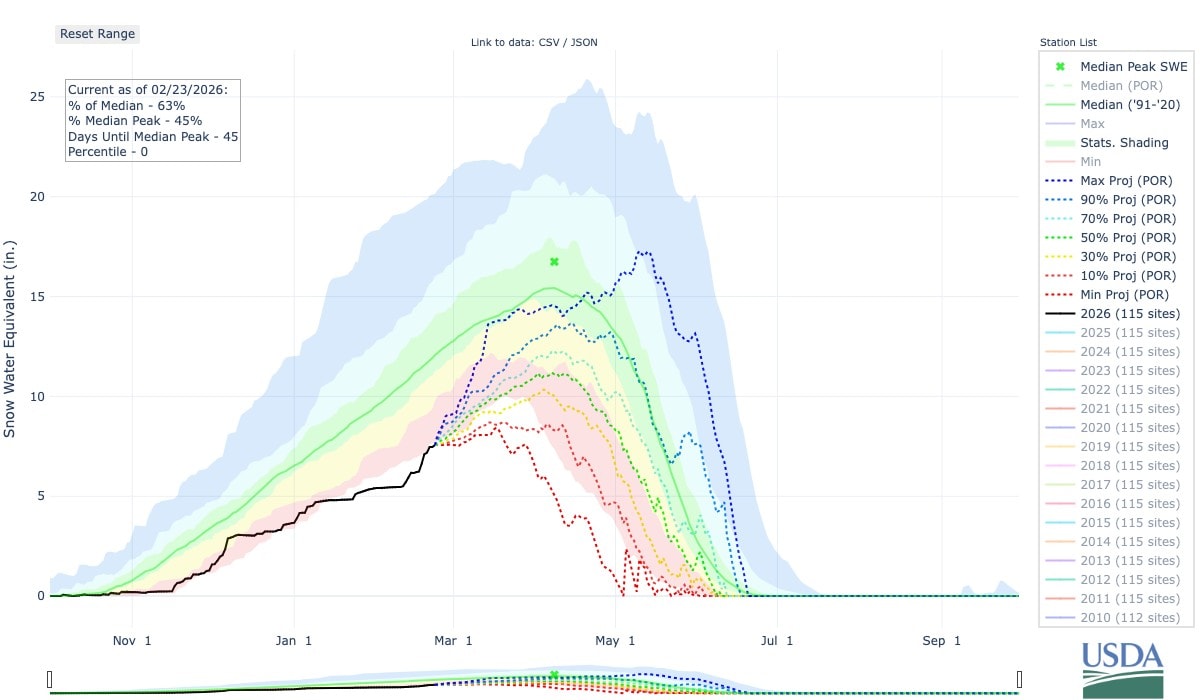
The potential outcomes for the snow water year are varied depending on how the weather plays out. We can only hope that we follow the purple and blue line above not the red or orange!
By now, you’ve likely heard that Colorado’s snowpack is low — historically low, in some basins. There is still time left in the season to improve conditions, and recent storms have helped bring snow water equivalent totals back within historical minimum and maximum ranges in some areas, which is encouraging. Forecasts suggest a more active weather pattern moving into March, typically Colorado’s snowiest month. While that provides a measure of cautious optimism, the broader concern remains. Even a strong late-season recovery may not fully erase the structural challenges facing the Colorado River system.
So what happens when water supplies do fall short? That is where the issue becomes more complex. Allocating limited water among states has long required cooperation, and while disagreements have existed for decades, they have rarely escalated into open conflict in recent years. Historically, reservoirs have buffered shortages, allowing operators to release water downstream to meet obligations. But as supplies tighten, negotiations between states have grown more strained, and the once relatively stable framework for sharing shortages is under increasing pressure. The core question is no longer whether sacrifices will be required, but how those reductions will be structured, who will bear them, and in what proportion. That challenge lies at the heart of the current Colorado River negotiations.
Negotiations to redefine the future of the Colorado River remain unresolved as the seven basin states, Tribal Nations, and the federal government work toward replacing the river’s operating guidelines set to expire at the end of 2026. Despite years of discussion, states have yet to agree on how future shortages should be shared, missing key federal milestones and raising the possibility that the U.S. Bureau of Reclamation could ultimately impose its own framework if consensus cannot be reached. Much of the disagreement continues to center on how reductions should be triggered and distributed between the Upper and Lower Basins, with Upper Basin states maintaining that they already live within their legal allocation while the Lower Basin seeks enforceable cutbacks tied to reservoir levels.
Lawmakers representing the Western Slope, including Jeff Hurd and Joe Neguse, have emphasized protecting local water interests and senior rights, highlighting recent efforts such as securing long-standing Shoshone water rights that help maintain critical river flows supporting agriculture, ranching, and rural economies across the region.
At the same time, Colorado is accelerating efforts to improve water measurement across the Western Slope, investing in new infrastructure and monitoring in basins including the Gunnison and Colorado River headwaters. State leaders argue that better data is essential as compact negotiations intensify, providing transparency around actual water use and helping inform future agreements in an era defined by prolonged drought and reduced flows.
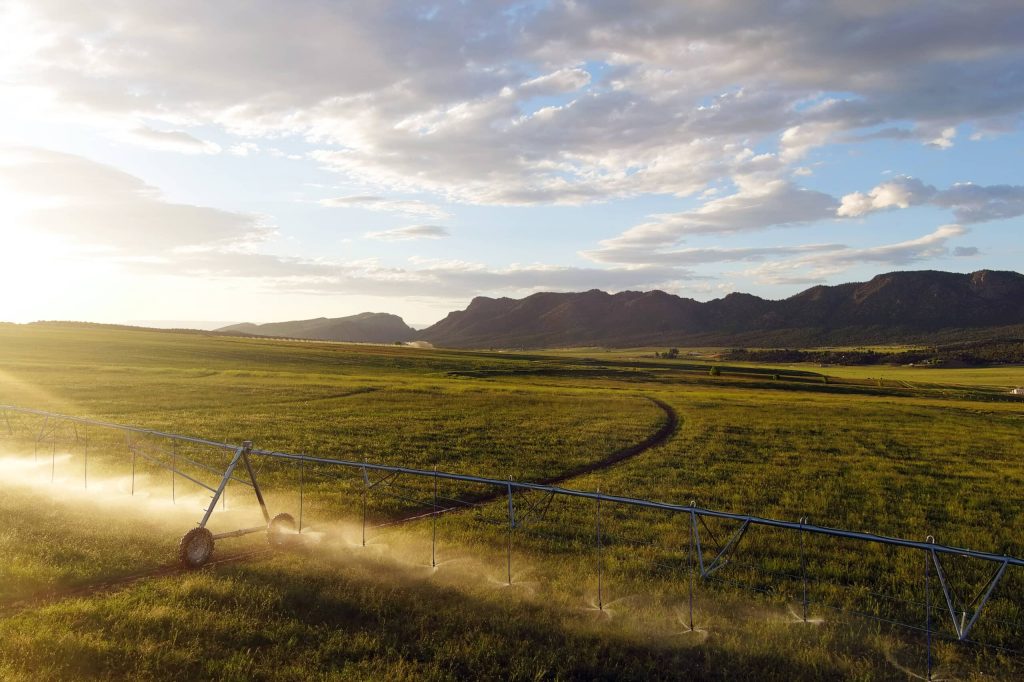
From the perspective of Western Colorado ranchlands, particularly in the Gunnison Basin, Montrose, and surrounding areas, these developments carry meaningful implications. Land value in this region is inseparable from water certainty. Clear, well-measured water rights, especially senior water rights, provide confidence to landowners and buyers. Better measurement and clearer long-term agreements can help distinguish between paper entitlements and reliable, usable water, reducing uncertainty that can sometimes cloud transactions in the landscapes of Western Colorado.
While the absence of a finalized compact update continues to create near-term ambiguity, there is cautious optimism that more precise measurement and a durable, negotiated framework will ultimately strengthen the value of Western Slope agricultural lands. For ranches that already hold established water rights, greater clarity around future obligations and availability has the potential to bolster confidence, stabilize markets, and reinforce the long-term resilience of working ground across Western Colorado, outcomes that matter as much locally as they do to the broader basin wide debate.
