
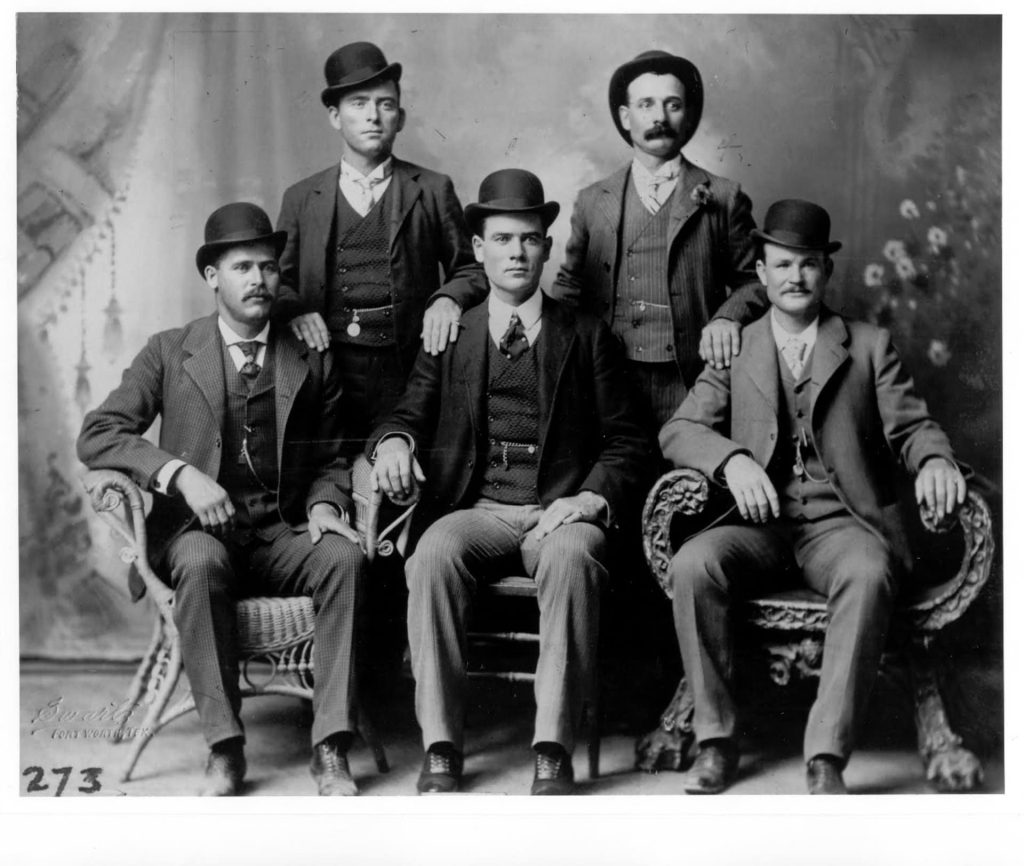
Long before Western Colorado became known for productive ranch lands, river valleys, and working landscapes, it was part of a much more wild and rough frontier. The same big country and secluded drainages that today define the region once offered opportunity of a different kind, attracting some of the most recognizable figures of the Old West as they moved through the area.
One figure, Robert Leroy Parker, aka Butch Cassidy is perhaps the most closely tied to Western Colorado lore. In 1889, he and his associates robbed the San Miguel Valley Bank in Telluride, often cited as his first bank robbery and one that helped cement his reputation. The surrounding country, with its deep canyons, high mesas, and maze of backcountry routes, made the region ideal for slipping away and laying low. From Telluride to the Uncompahgre Plateau, the landscape was in some ways an one their best accomplices, offering cover, distance, and perhaps, anonymity.
Among the figures of the Old West who passed through the landscapes of Utah, Colorado, and Wyoming, Harvey “Kid Curry” Logan stands out as one of the most notorious, and complex, members of Butch Cassidy’s Wild Bunch. Born Harvey Alexander Logan in Iowa in 1867, he came west as a cowboy before a series of clashes with the law drew him into outlaw life and onto the frontier trails that wind through the valleys and mesas we know today. Curry earned a reputation as a skilled rider, strategic scout, and in some accounts the most volatile member of the Wild Bunch, participating in bank and train robberies across the West, including the infamous 1899 Wilcox, Wyoming train robbery. Known for his willingness to engage in gunfights with pursuing lawmen, Curry’s long flight eventually brought him back into Colorado, and in 1904 he was wounded during a train robbery near Parachute, west of Glenwood Springs. The wide spaces, sparse population, and limited law enforcement of the time made the area a natural attraction for nefarious actors like Logan and Parker.
Closer to Montrose, a cast of lesser-known but very real characters also passed through or operated in the surrounding country. Matt Warner, an outlaw who later became a lawman, rode extensively across Western Colorado and Utah, navigating the same high desert and canyon lands that define the region today. The mesas, river bottoms, and mountain passes of Western Colorado shaped how people lived, traveled, and survived. That same geography now supports ranching, agriculture, and conservation, but it still carries echoes of its frontier past.
At Eagle Land Brokerage, we work in landscapes that have always demanded self-reliance and respect. While today’s Western Colorado is defined more by conservation and respect for the land rather than the stories of outlaws and legends, the history adds texture to the places and people we represent. These valleys have always been places where people came seeking opportunity, shaped by terrain that rewards those who attempt to understand them. Just like the stories of the past evolve into the legends of today the landscape too is ever changing, eroding from the wind and the rain to carve out the profiles we see today. Our beloved landscapes may look similar to what they did way back when, but these landscapes are, in fact, always changing.
