
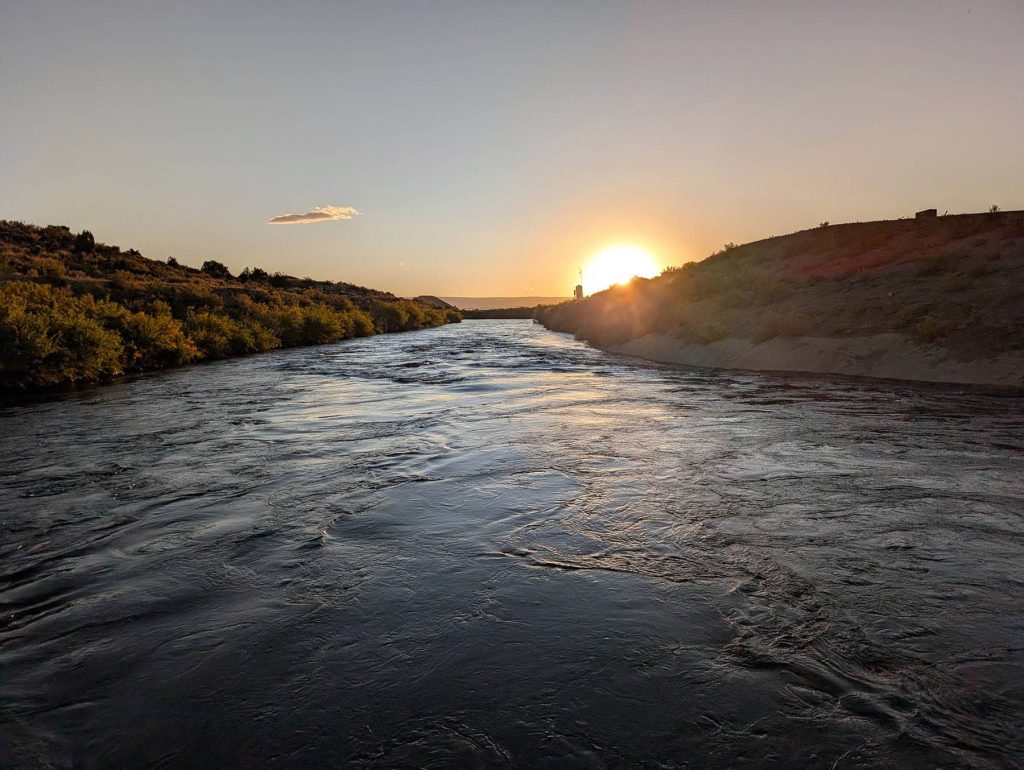
The concept of priority water rights in the American West emerged not from theory, but from necessity. As settlers moved into arid landscapes during the mid-19th century, they quickly discovered that Eastern riparian water laws, which tied water use to land bordering a stream, simply did not work in places where rivers were scarce and seasonal. Miners, farmers, and ranchers needed a system that rewarded initiative and provided certainty in an environment where water was often the limiting factor.
Out of this reality grew the doctrine of prior appropriation, commonly summarized as “first in time, first in right.” Those who first diverted water from a natural source and put it to a recognized beneficial use gained a priority claim that could be enforced against later users during times of shortage. This approach encouraged settlement and investment by assuring early users that their access to water would be protected, even as new communities developed upstream or downstream.
Over time, these practices were formalized into law, with water rights adjudicated by courts and administered by states. Each right was defined by its priority date, point of diversion, place of use, and amount, creating a legal framework that could be relied upon year after year. In dry periods, senior rights are satisfied first, while junior rights are curtailed, a structure that continues to govern water use across much of the West today.
For agricultural regions and working landscapes, priority water rights remain foundational. They provide predictability in a variable climate and form a critical part of land value, particularly in basins where water scarcity shapes both daily operations and long-term planning. What began as a practical solution to survival in the West has become one of the most enduring legal systems shaping land, agriculture, and growth across the region.
In much of Western Colorado, water rights are not only tied to individual parcels but are also commonly held through ditch companies. These entities were formed historically to construct, maintain, and manage shared irrigation infrastructure, delivering water to multiple users from a single source. Ownership in a ditch company is typically represented by shares, each corresponding to a proportional right to use water conveyed by that ditch, subject to priority date and seasonal availability.
Unlike modern utilities, ditch companies operate on a cooperative model. Shares may be bought, sold, or transferred—often in conjunction with land, but sometimes independently—depending on the company’s bylaws and the nature of the underlying decree. In practical terms, this means a landowner may hold deeded acreage alongside a defined number of ditch shares that collectively determine how much water can be delivered to the property in a given year.
For buyers and landowners, these shares can represent both tangible value and long-term security. In a region where water defines productivity, habitability, and legacy use, understanding how ditch company ownership functions is an essential part of evaluating Western Colorado land. As always, careful due diligence is critical, as share availability, transferability, and historical use can vary widely from one system to the next.
